
Media as a Growth Multiplier: Lessons from SharkNinja
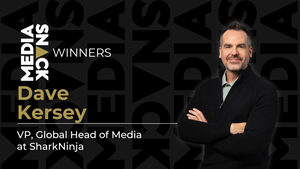
Modern media has never been more powerful or more misunderstood. Many CMOs and procurement leaders still see it as a cost to control, not a system to grow. In this #MediaSnack Winners conversation, Tom Denford and Dave Kersey, VP Global Head of Media at SharkNinja, show what it looks like when a business actually treats media as a growth multiplier.
Dave explains how SharkNinja is moving beyond traditional media buying into a signals-driven, agentic operating model that connects investment, consumer behavior, sales, point of sale data, and even inventory into a single ecosystem. The result is a culture that moves at the speed of commerce, not reporting cycles, and a media function that truly behaves like a demand engine.
For CMOs, Procurement Directors, and Global Heads of Media, this episode is a practical blueprint: how to reframe media’s role, how to build the right operating model, and how to coach your teams to thrive in a fast, AI-enabled environment.
The ID Comms Breakdown
In this #MediaSnack Winners episode, SharkNinja’s VP Global Head of Media Dave Kersey shows how media as a growth multiplier works in practice: build a signals-based operating system, connect every channel to revenue, and empower teams to test, learn, and reallocate budget in near real time.
What's going on?
Across the industry, there is clear media fatigue. Marketers are overwhelmed by complexity, agencies have weathered constant disruption, and many leaders quietly feel 'over' media. At the same time, media still accounts for the majority of many marketing budgets, and the growth stakes have never been higher.
Dave’s view from SharkNinja is that the old model of media as a pure buying function is no longer fit for purpose. Instead of focusing on 'buying audiences' in platforms, his team builds a signal system around the consumer: what people know about the brand, where they are in the journey, and what will move them to action in a single session.
Commerce ecosystems already support this shift. Amazon provides a closed-loop path from the living room screen to mobile to purchase. TikTok Shop lets SharkNinja drive inspiration to transaction in one continuous flow. External analysis, like the agentic AI work highlighted by Cognizant in its overview of agentic AI in media, shows the same pattern: the real opportunity is building operating layers, not just buying impressions.
What are the implications?
For CMOs and procurement leaders, the implication is stark: if your media system still behaves like a line item in a buying spreadsheet, you are leaving growth and competitive advantage on the table. Media needs to operate like a hedge fund, not a rate card, with disciplined risk-taking and rapid reallocation of capital.
Dave’s team is building an internal 'agentic model' as a demand acceleration platform. It connects media, marketing, sales performance, point of sale data, inventory, and even market share into a single ecosystem. That means SharkNinja can see, in near real time, where media is driving incremental demand and whether there is stock available to convert it.
Industry coverage of agentic media, such as Digiday’s reporting on agencies launching agentic planning and buying systems with partners like NBCUniversal, FreeWheel, and Newton in its agentic media overview, confirms this direction. The leaders are not just adding AI tools; they are rebuilding the operating model so that media decisions sit on top of tightly connected data and a clear governance framework.
How should marketers be thinking?
Dave’s repeated message is that you cannot wait for perfect data before you act. SharkNinja optimizes campaigns daily and weekly, and the culture expects big swings, fast feedback, and fast exit from ideas that do not work. 'Progress over perfection' beats paralysis.
Practically, this means reframing the questions you ask your teams and partners. Instead of 'what audience are we buying on this platform', ask 'what signals matter most to our business this week', 'how are we closing the loop between exposure and sale', and 'what did we learn yesterday that should change today’s plan'.
Marketers should also insist that AI remains a tool, not an autopilot. The Digiday coverage above emphasizes human oversight as essential to avoid 'rogue' agent behavior. That aligns with Dave’s view: the value lies in giving experts better visibility and faster options, not in outsourcing accountability.
From Media Buying to Signal Systems
Dave draws a clear line between the legacy language of media planning and the new reality of signals. In the old model, teams built annual plans, bought audience segments, and waited for quarterly reports. At SharkNinja, media teams watch signals across Amazon, TikTok, retail media, and owned channels in near real time.
Instead of anchoring everything to third-party audience data, they start with consumer behavior: reviews, ratings, user-generated content, and the commerce platforms where purchase can happen in one session. That shift lets them design journeys like 'see it on TikTok, research on site, purchase on Amazon' and measure each link.
For CMOs and procurement leaders, this requires different questions of agencies and internal teams. You are not only buying reach; you are building a signal system. That means investing in clean data flows, shared dashboards that connect media outcomes to business outcomes, and an operating rhythm that treats optimization as a daily habit, not a quarterly event.
Inside SharkNinja’s Agentic Media Model
SharkNinja’s operating culture reinforces this model. Dave describes shutting down the company globally for a 'Jailbreak AI Hack' week, where 4,000 employees gathered in hubs to prototype AI-enabled solutions across finance, product, marketing, and media. AI is not a side project; it is a company-wide expectation.
Job descriptions from SharkNinja echo this: roles in strategic programs and media analytics explicitly call for AI-native, agent-driven insight generation and full-funnel measurement. That lines up with the 'demand acceleration platform' Dave is building, where media investment, competitive share, and inventory data live in one environment.
The key for media leaders is that this is not about chasing every new tool. It is about designing an operating system: clear outcomes, connected data, empowered teams, and the freedom to experiment. When those elements are in place, AI agents and automation amplify good strategy instead of amplifying noise.
Career and Leadership Playbook for Modern Media Teams
Dave’s leadership advice is refreshingly direct. First, stay focused on output, not noise. In media there will always be platform hype, internal opinions, and partial data. Your value as a leader is keeping teams anchored on the business outcome, not the swirl.
Second, cultivate comfort with ambiguity and risk. SharkNinja encourages 'fail fast, move on' behavior in media. Teams are empowered to say "It failed. Fail fast, move on, figure out something else" when an idea underperforms, and to scale what works quickly across markets.
Third, own your career. Early in his journey, a manager told Dave, "No one cares more about your career than you do." He has treated that as a mandate to make intentional moves, to learn by building things, and to carve out roles that match his strengths.
For CMOs and procurement leaders, the takeaway is to build environments where your media talent can do the same: clear goals, permission to test, and honest feedback loops. And if you want a confidential, experienced partner in designing that environment, get in touch to confidentially discuss your 'gameplan' and options to protect your competitive advantage in media.
Frequently Asked Questions
What does 'media as a growth multiplier' mean?
In Dave Kersey’s words, media is a growth multiplier when every dollar behaves like an investment, not a cost. That means connecting spend to sales, market share, and brand outcomes, then reallocating budget quickly toward what is working across channels.
How is SharkNinja’s media team structured to win?
Dave wears three hats: capital allocator, audience strategist, and operator. The team is set up to manage large budgets, design audience activation around signals, and run a highly efficient operating model that keeps pace with a very fast-moving business.
What is an 'agentic' media model in this context?
At SharkNinja, the agentic model is a demand acceleration platform that connects media, marketing, sales, point of sale, inventory, and market share in one ecosystem. AI agents help surface insights and options, but humans still set strategy and make the final calls.
How does SharkNinja use AI in media decision-making?
AI is used to connect and interpret data rather than replace people. Dave’s team uses AI to bring together media performance, business outcomes, and competitive signals so they can see patterns faster and make smarter decisions in real time, with human oversight.
How fast does SharkNinja optimize campaigns?
The culture expects daily and weekly optimization, not quarterly reviews. Dave describes seeing performance in real time, taking big swings, and then scaling ideas quickly into other markets when they work, or shutting them down fast when they do not.
How does SharkNinja balance performance and brand?
Because SharkNinja’s 'brands' are product-led, brand strength often shows up in reviews, ratings, and user-generated content. Media is designed to get products into people’s hands and encourage them to talk about them. Dave sees almost all media as performance, even when impact is modeled rather than directly measured.
What mindset does Dave recommend for young media professionals?
He advises staying focused on the output, not the noise, and being comfortable with ambiguity. You will rarely have perfect data, so you need confidence, intuition, and the willingness to test and learn, rather than waiting for certainty that never arrives.
What leadership principles guide Dave’s career?
Two stand out: progress over perfection and owning your own career. He believes in trying ideas, learning quickly, and moving on. And he expects professionals to take responsibility for their growth rather than waiting for someone else to map their path.
How should CMOs think about AI and 'rogue' agents?
CMOs should see AI as an operating layer that speeds up good decision-making, not as a black-box autopilot. Industry voices, from SharkNinja to agency leaders quoted by Digiday, stress sliding scales of human oversight so that AI amplifies strategy without creating unacceptable risk.
What should media leaders prioritize in the next 12 months?
Dave’s hope is that we move past obsessing over tools and get back to the art of media. That means building strong data foundations now so that, over the next year, teams can spend more time on strategic storytelling, better consumer connections, and braver testing.
Episode Transcript
No one cares more about your career than you do. You are empowered to make your own decisions, to help grow, to learn new things. Don't wait for someone to guide you and tell you, because it might not happen, and you'll fall back. Hello, and welcome to MediaSnack Winners, the fast-paced podcast interview show where we get to meet the individuals and organizations doing great work to inspire success and drive change through the global media and marketing industry. On MediaSnack Winners, we get to learn what is behind that success, what it takes to make change in the industry, and what the rest of us can learn from those experiences.
My special guest for today's show is Dave Kersey, who's VP Global Head of Media at SharkNinja. Thank you so much for joining us. Thank you for having me. Happy to be here. Let's start off by saying, like, what, what is it that you do, for those that don't know you, um, and what does it take in your role to win? Uh, it's a big question. Uh, and I'll say oftentimes it changes on the daily basis. But if you look at global media from where I'm sitting today, it means two really critical things.
Um, let's call it three critical things. Mm-hmm. One is this hat of, um, hedge fund management. So if I'm responsible for managing a large sum of money, as most media operators do, how best do. I deploy those dollars to get the most return out, right? I mean, pretty simple. I would say the other component is more of this idea of audience strategy or audience activation, where the, the world of media has changed so much, the idea of media planning is really a thing of the past with technology, uh, data infrastructure, and it's really about leveraging these dollars to reach the right audiences to activate in real time.
The third piece is, um, I would say operational excellence at its highest level because the world is moving so fast. Our organization at SharkNinja is very fast, and in order to do that, you have to have a really good operating system, operating model, so you can move at speed. So you take all three of those, and it really shows up as global media in that we're leveraging our dollars to reach the right consumers to take action in real time.
Give us just a quick summary of your journey to here, to this, to this point, and what have you, what have you been doing for... And, and what is something on that journey that you've been most proud of in your career? Yeah. It's, um, it's been a fun, fun journey for sure, and a very intentional career path, which started largely within the agency environment, um, really with the full service agency model, which is, um, I think where I learned a lot about marketing, advertising from a wide perspective, um, really leaning into media and the role media plays in, in driving a business forward.
From there, went to media-only shops because that's where you're surrounded by a lot of people that believe and feel the same way you do about how you can drive the business through media. Uh, but with all the evolution across the industry and just seeing what's happening with, um, consolidation or just brands moving at different speeds requiring different needs, um, I moved to the brand side 'cause I really felt that where I can have the most impact is if I have full visibility to the business, the data, the insights, what's motivating, um, a business to make decisions, and what's motivating consumers to buy that brand's, um, product.
Um, so moved to the brand side, um, and it's been an incredible ride. It is very different than, you know, if you look at agency versus, like, a brand role. Um, related, um, I think starting to separate quite a bit more than they used to, uh, because brands are just moving at a much higher, higher, faster rate.
Um, when I look back. on my entire journey, what I'm most proud of, um, selfishly, you saying you've seen me on other podcasts. I think that's a really big kudos, so thank you- ... for seeing that. Um, but I would say professionally, it, it's more of what's next and what am I proud of that's, that's coming, uh, because there's been incredible things happening in my career, as many of my peers' careers. But given just where everything's going and how fast- it's moving, I'm in progress of building an agentic model internally for SharkNinja with a number of people, I'm not doing it myself obviously, um, that's intended to be a demand acceleration platform, and it's to take a lot of the ambiguity out of what we do and really connect all of the data across media, marketing, sales performance, point of sale, um, inventory, um, I would say even market share, into one ecosystem so we can have all the data front and center, and I can decision on how I'm investing and how I'm driving the business forward.
And so I'm super excited about it. We're in the middle of it right now, and I think when it comes to fruition, it's gonna be an incredible game changer for us. Amazing. Amazing. I mean, one of the things that, you know, as I've learnt more about what it is that you're, you know, what you do and what you're doing and the way that you talk about media is there's a lot of people in the industry. a bit fatigued with the complexity of media a little bit, I think if marketers are honest.
I mean- Yeah ... you know, they find it a bit overwhelming, and I think there's a lot of people in agencies that have been through loads of disruption, and there's, I think there's a, a general sk- you know, a bit healthy skepticism and cynicism amongst some, you could say, some people just sound like they're over media.
And I think as I've learnt more about what you guy- you're doing and what you, you're doing at SharkNinja, it's a really, it's, you know, it can kind of re- reignite your kind of passion. You have, you guys have a passion for media and understanding for media, as you say, as a demand engine, as a, an- Yep ... investment in growth.
This really healthy message, I think, for everybody, just to say this is really important stuff. You know, it can feel a bit overwhelming, and there is a, there's an industry, fatigue that happens, I think- Um, but that's why I like the way that you've been talking about media because it actually reminds us it's really exciting and it's not only that, it's really important for business, uh, as well. Yeah.
So thank you. Thank you for that. Yeah, of course. It's, uh, media's a growth multiplier. Uh, doesn't matter who' you ask, it's fact. Yeah. Uh, our organization believes that how we show up, how we engineer success, how we engineer virality is our edge. It's, it's part of what's made SharkNinja. this powerhouse business.
Um, in part our incredible products are the driver, and then we're just getting it out there to make sure people like, yourself know about them and are- Mm ... excited to purchase them. Yeah. Very good. Uh, I've got so many questions about product, but this is really not about product. Right. What, are the biggest challenges in media from your perspective? Let's unpack that a bit.
Uh, biggest challenges in media, if I look at the industry versus, um, internal, starting with the industry, I would say we're, we're... It, it still operates as a meeting, buying function. Um, and you know, the partners, the platforms, it's about spending money, buying media, buying audiences. And I think the world has changed so fast that we've moved, um, especially in-house to, uh, internally around this idea of signals and we have to build a signal system in order to understand the consumer, what step of, of this journey, what level of knowledge do, they have about us, and their interest to take that next step or to convert.
Mm-hmm. And why I think that's so important is. when I look at the con- consumer behavior, which is we're a consumer-first company, right? So consumer behavior matters so much to, to us on not just product development, product engineering, it's how we connect with them with storytelling and, and getting them to our site to learn more about us.
Um, but if I think about commerce engines and you, you look at, um, ecosystems like Amazon, that's really an omni-channel closed- Mm-hmm. ... loop ecosystem. We can drive incredible performance in single sessions from living room screen to mobile to purchase. Mm. We're starting to build that muscle with things like TikTok, which is where so much, uh- Mm ... attention is being spent with TikTok Shop, and we can drive incredible conversation from inspiration to action in a single session.
Mm. And as you think about this from a consumer perspective, it moves you away from this idea of, I have to buy audiences in all of these various platforms because it's what these, uh, this third-party data is telling me to do, versus what are those signals that matter to me in order to move- Mm-hmm ... my business?
Let's take, let's take this old model, throw it to the side because the world's changed and we have to adapt and almost create our own model to be successful and really continue to accelerate beyond all of our competitors. Yeah. Yeah. I, uh, if, if I look at internally, it's, it's more of how do, I build the right? organization expertise, the skill set, upskilling to make sure we can capitalize on that. Almost, you know, unlearn some of those things from historical- Mm ... legacy models to create our own and move us at speed, and certainly technology's helping us do that at a much, higher rate.
This is amazing. I mean, it's kind of reframing the way you can think about media. I think a lot of, a lot of, from a lot of brands, the work we do is all for, you know, working with advertisers and often helping them navigate and make decisions in media, and you guys are clearly really good at that.
Uh, but there's a great confidence I think in the company that I, uh, probably is quite in- infectious, isn't it? I think where, where you've had success and then it makes you not fear the media industry and its complexity, but you're just like, right, that's quite a revolutionary thought, you know, of moving- Yeah ... away from those kind of traditional ways of thinking about media to something which, which works more for your business.
Uh, I really like that. Yeah. It, the, we, we move so fast that, um, the beauty is you get to see the performance in real time. Yeah. You're not setting a campaign and then waiting a quarter for results. We are seeing it daily, weekly. We're optimizing daily, weekly, and you know, we are empowered to take big risks, big swings.
Um, not everything works, not everything drives the business, but that's okay. And we're also empowered to say, "It failed. Fail fast, move on, figure out something else." If it happened to work, let's scale it, move into other markets and see how, how it can actually drive us, um, to a new place.
So it really is the culture of, of moving fast and getting excited about seeing the results. It really is empowering when you see like, okay, well, this worked, now let's do more and try it a different way to see if it changes that dynamic. I love this. This is great. This, uh, this is not just an get to know Dave. This is a, I think is a re- re-educating people about m- what media is, which is really helpful.
Uh, thank you for sharing. We're gonna stick with our fast-paced question show. As much as I really would love to- Okay ... just to span into like a 90-minute deep dive, but, uh, but- ... I really enjoyed the, the i- the interview that you did with, uh, Mike Shields on Next in Media. We're now, and I'll make sure that we link to that, 'cause if anyone's wants to know a bit more about the stuff that Dave is talking about here at top li- top level, um, listen to that and there's, there's some other places.
You've been on some panels recently I know, uh, talking about this stuff. It's very cool. I mean, I'm, I'm asking you like kind of current state of, of your domain and, you know, what, what it takes to succeed. I think you've just kind of given us that blueprint. Is there anything else that you would like us or listeners to know about how to get the most out of media?
How to really treat it like an investment in growth? I mean, what, what other things are you doing that's, that could be interesting for us? Um, there's quite a few. I mean, uh, anyone in this profession, you have to have, uh, uh, a level of understanding and, and, and comfort with ambiguity and taking risks. I think our industry's been so predicated on you must have data, you must have it perfect in order for you to take action.
We believe in progress over perfection, and so let's try something- And see how it works, and then, like I said before, scale it. Um, but you have to have a level of confidence and intuition to say, "I believe this is gonna work with all the data I have at my fingertips." It's, it's not everything, and I'm not sure 100%, but I believe you put it in market, you optimize quickly because you can engineer success.
Uh, but it has to start with the level of strategic thought, not just pushing paper or pushing ideas that a platform or someone else has told you, right? You have to know what your business is trying to deliver on, bring some fun, interesting, strategic ideas forward, and just test them. Test always. Yeah. Hmm.
And do, do you have a-- Do you have responsibility for the brand as well? I mean, to what extent is that 'cause I, I understand it's, like, real time. and it's always testing and you're innovative, but also at the same time, SharkNinja has built this amazing kind of reputation a-around its products from a media implementation perspective.
And I say this because when I interview a lot of media directors, they're often under pressure internally to be very performance and short-term, but it's something that, they have to push back a little bit. Um, last week I was interviewing Megan Matlock, who's a peer of yours at FanDuel, and she's a kind of global media lead there, and she said something wonderful, which was like, something like, you know, "Not everything that's valuable is immediate, uh, or measurable, and sometimes you have to manage expectations of the business that we, we' can, we can drive value in other ways, too." Do you, do you ha- kind of have, have that responsibility with the brand? Yeah.
Um, I would say it's more of the inverse because we are-- If you look at a portfolio business, our- Mm ... our, uh, umbrella is, SharkNinja. Our individual brands are our products. Mm. And we really do look at it' that way. Um- Yeah ... where we believe, a-and I think this is, true, if you can build really strong, quality products and consumers believe and are loyal to them, it shows up in reviews, ratings, and it shows up in UGC.
Mm. That is really the strength of our brand, getting people to talk about us on their own, getting people to review us because they love our products. Um, and so our brand-building initiatives are done in a very different way because of that, because we don't need to, to tell someone to love us. We need them to try us to love us, and so it's getting products in their hands. Yeah.
Um, and so it's a bit of a, a inverse of that where we are really driven by performance. But I look at all media as performance to some level. It's not all measurable- Mm ... but you can still build models to understand its impact. Yep. Yep. Very good. Love that.
Now, you mentioned some-- You're putting some time and resource and, and probably a fair bit of money behind, uh, applying agents internally. Um, so how is AI or thinking about agents impacting the role of a media director? And if there's any examples or whatever you can share is interesting. Yeah. I'll, I'll be quick 'cause I know this is supposed to be rapid fire and I'm keep going long.
That was my fault. A, a few months ago, we shut down our entire company globally, um, for what we call Jailbreak AI Hack, and the whole idea was all 4,000 employees go to one of our hub offices regionally, um, and over a course of a week, we hack solutions to any problems across any, any division, finance, product, marketing, media, uh, to come out with solutions on how AI can be an enabler of success for us and an enabler of speed for us.
So from top down in our organization, we're all empowered. We have access to all of, all of the, you know, the bells and whistles, cloud, et cetera. Um, so it's, it's expected at this point that we are leveraging AI to every component. I would say where it's really benefiting us, um, a-and my team is having all the data connected.
Not just looking at media investment and media performance, but connecting it to business outcomes, connecting it to, uh, co-competitive, uh, scale and share, and certainly competit- uh, uh, connecting it to things like inventory and ensuring that we have something to sell if we're driving an incredible demand generation.
So it's enabling us to get smarter and really bring everything into a, a collaborative environment, um, which again, allows us to make smarter decisions in real time. Yeah. Yeah. Love that. Uh, good. Now, this is really is rapid fire, okay? So, uh- You keep saying that. I know, because, uh, I'm getting dis- I'm getting distracted by these really good answers, so I appreciate that.
Um, but, uh, you know, I know that those that listen must want us to get to these, the juicy ones at the end, which is- Sure ... so what advice would you give to people coming into the industry? As you said, like you've, you've worked for different kind of components in the industry. You've got a really good perspective.
Um, I love tapping, you know, people with experience and, and, uh, for their advice. W-how, how can young people, like, succeed in, in, in the media industry? Uh, I would say broadly, and some advice I've, I've lived by throughout my career is stay focused on the output, not the noise.
Um, so really understand what the goal is, what you're trying to accomplish. There's always gonna be swirl. There's always gonna be other opinions. But if you stay focused, it's gonna have actually incremental gains and benefit for you. And I hold that true to my professional life, my personal life, and I think it's really important so you don't lose sight of what you're trying to accomplish.
Across media, because of the, the changes, the industry, the marketplace, it's very similar. Take yourself out of the noise. Figure out what you're trying to accomplish and what, what are the best solutions to get you to the end answer or at least to get you moving closer to that answer.
Um, we do live in a world of a bit of ambiguity, of walled gardens, of closed ecosystems where you can't necessarily connect all the data. Mm-hmm. You can still build models around that. You can still find ways that don't, um, debilitate you, right? Where you say, "I'm stuck. I don't know how to answer this." You have to use your intuition, and you have to use the best models possible because leadership, um- Boards, CEOs, they look to us for answers and guidance, and we're the experts.
And so we can't show up with, "I don't have an answer because of this." Mm. "I have an answer. This is how we get around this." So it really is just staying focused. Very good. Love that.
Um, best leadership advice you've ever received or something that you frequently give to others? Um, uh, it's probably not the best one for this, but, uh, I'll- I'll share it with you. And it was early in my career, uh, and it's something I've been grounded in, um, ever since.
Uh, my, my first, second manager in my career, my advertising career, media career said, "No one cares more about your career than you do." Um, and I took that to heart because you are empowered to make your own decisions to help grow, to learn new things. Don't wait for someone to guide you and tell you, because it might not happen and you'll fall back.
And I've taken that throughout my entire career. Like I said at the beginning, my entire career journey's been very intentional. Um- Mm ... I love building things. I've learned that early on, and I've carved out paths to do just that. Very good. Love that.
Uh, where would we find you outside of work? So personal passion outside of work to get away from the crazy of media. Uh, who says we get time outside of work? Uh, where is this coming from? That's nonsense. That's what every- that's what everybody s- everybody says the same thing. Yeah.
Uh, traveling. In, in an ideal world. Yeah, traveling as much as possible. Traveling. Especially in the role I'm in now. Yeah. I travel quite a bit across all the continents, and I love it. And so I kind of- Mm ... you know, use it as a catapult to say, "Let me stay an extra day. Let me enjoy it." Yeah.
Finally, so we've talked about some of the challenges. I think your, you know, your- your mission here is very inspiring, as I said. So, uh, they've all been very positive and constructive actually. But just where would you like us to be, uh, 12 months from now? What are your hopes for the year ahead for the media industry?
Uh, my hope is we move away from focusing so much on the data and tech because we'll have a stronger foundation and infrastructure, especially with AI, where we can start putting more strategic thought into media as the art because it's been so science-focused for so long, and I think we're missing the mark of the balance.
And so that's my hope, is that we can get back into really connecting with consumers in a meaningful way and doing it to the right consumers because our tech is, has that strong foundation. Very good. Dave Kersey, VP Global Head of Media at Shock Ninja, thank you so much for joining us.
Thank you for having me. This was fun. Sorry it wasn't quick. It's okay. We learned a lot. It was a gift. No, appreciate it. Thank you. Thank you for joining us on this episode of Media Snack. If you enjoyed this episode, please leave a positive review, and remember to like and subscribe on YouTube. And we love hearing your comments, so please don't be shy in the comments section below. That's it for now. See you next time on Media Snack.





COMMENTS